Become a Certified
Community Helper
Help Us Grow Our Community of Care
Our community members support one another through life’s hardest moments with compassion and confidence. Build the skills to recognize distress, respond safely, and connect people to the support they need.
Connecting to the Right Resources
CMHE’s 3R Approach—Recognize, Respond, Refer —equips community helpers to connect members in need with appropriate resources, ensuring no one is left to navigate these systems alone. Supportive services typically involve local settlement agencies, mental health services, local community programs, and the City of Calgary community initiatives.
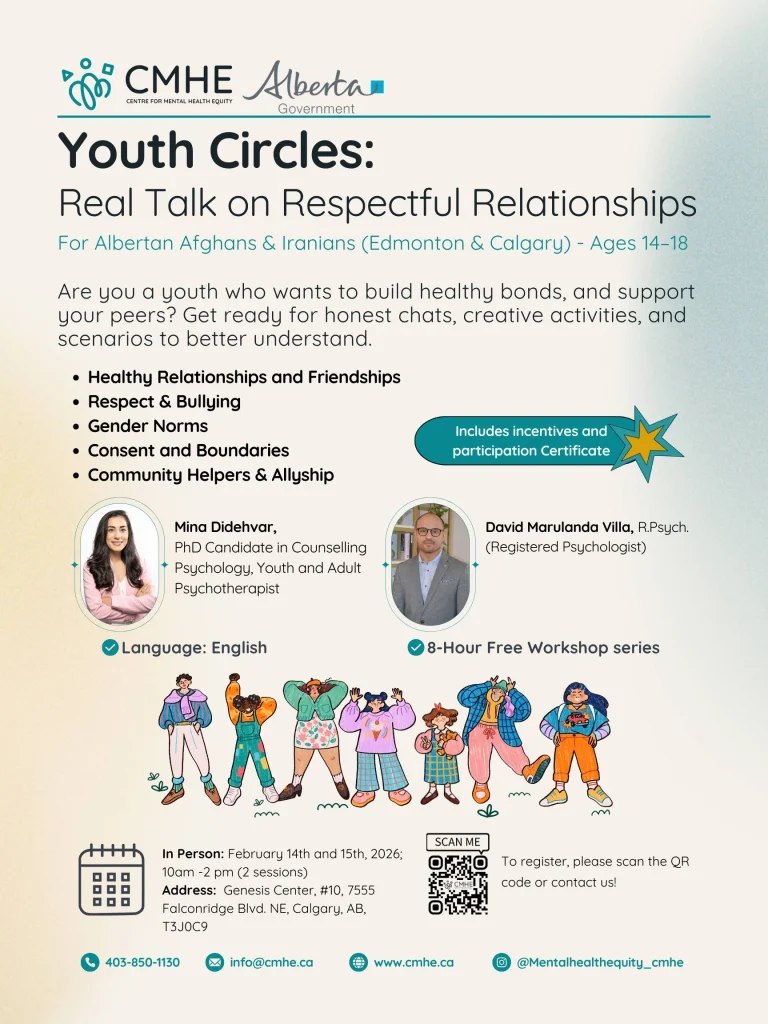
In Person:
February 14th and 15th, 2026;
10 am -2 pm (2 sessions)
Youth Circles:
Real Talk on Respectful Relationships
For Albertan Afghans & Iranians (Edmonton & Calgary) – Ages 14-18.
Are you a youth who wants to build healthy bonds and support your peers? Get ready for honest chats, creative activities, and scenarios to better understand.
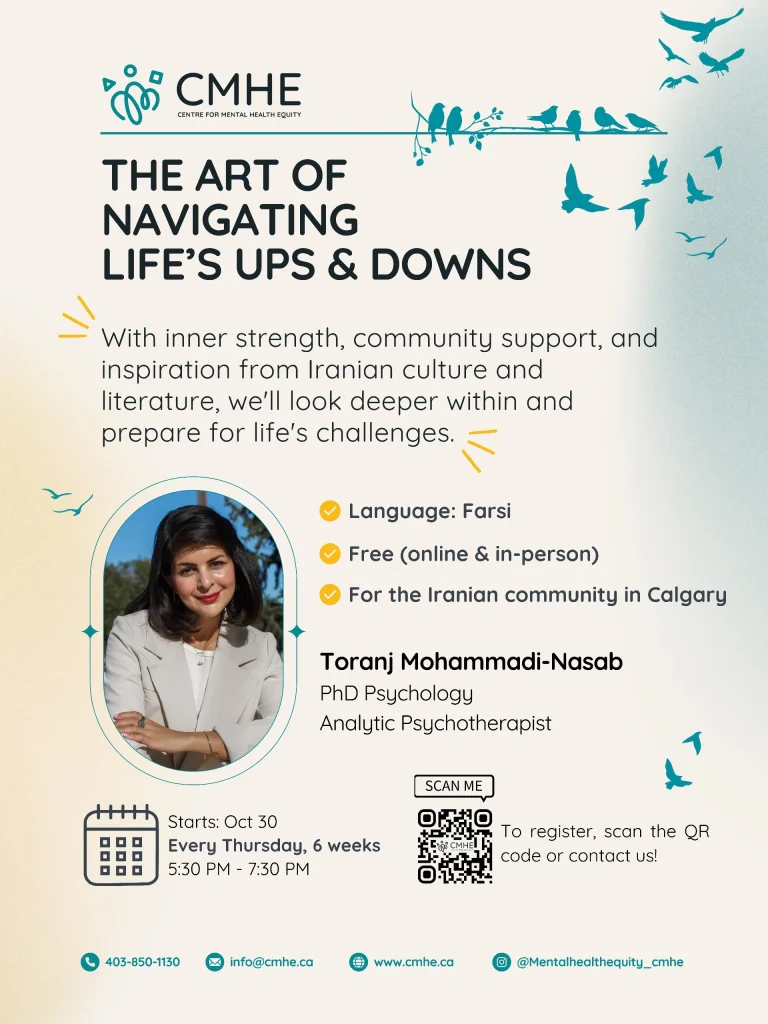
online & in-person:
Starts - Oct 30
Every Thursday, 6 weeks
5:30 PM - 7:30 PM
THE ART OF NAVIGATING LIFE’S UPS & DOWNS
Language: Farsi
With inner strength, community support, and inspiration from Iranian culture and literature, we’ll look deeper within and prepare for life’s challenges.
Online:
starting - Jan 10th, 2026
Saturdays 10 am -12 pm (MT)
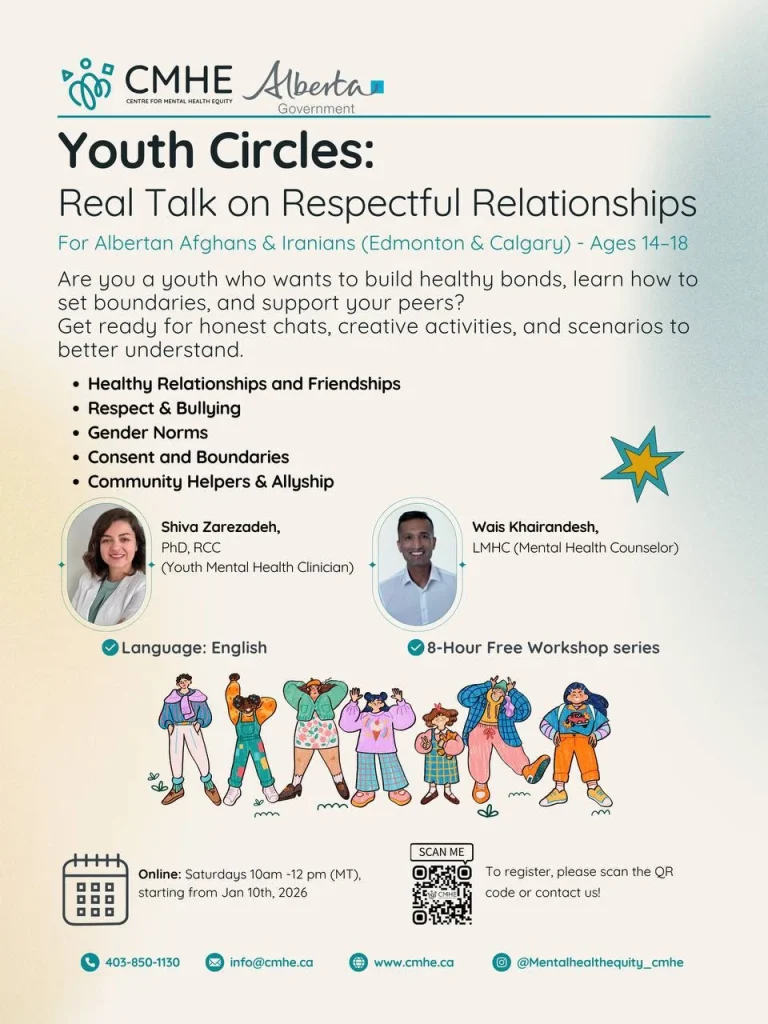
Youth Circles:
Real Talk on Respectful Relationships
For Albertan Afghans & Iranians (Edmonton & Calgary) – Ages 14-18.
Are you a youth who wants to build healthy bonds, learn how to set boundaries, and support your peers?
Get ready for honest chats, creative activities, and scenarios to better understand.
Our 3R Approach:
Recognize, Respond, Refer
The 3R Approach is a culturally informed model that enables community members to support one another with confidence, care, and compassion.
Recognize:
Identifying Signs of Distress
Community Helpers are trained to notice signs of distress in others that may suggest someone is experiencing difficulties. This helps people receive support earlier, before challenges grow more serious.
Respond:
Providing Safe and Culturally-Informed Support
Helpers receive training to respond with empathy, listen carefully, and offer support in ways that feel safe, respectful, and culturally meaningful. This helps build trust and ensures support is relevant and helpful, especially for newcomers who are experiencing stress after migration, social isolation, or changes in family life.
Refer:
Connecting Individuals to Appropriate Resources
When further assistance is required, helpers direct individuals to city services, community programs, and mental health resources available in their preferred language. This step highlights CMHE’s commitment to reducing barriers, promoting equity, and ensuring that no one must navigate the system alone.
Community Helper Training
Empower yourself and your community by becoming a certified Community Helper. This program equips you with the skills to provide support for those in distress and bridge gaps within communities. Check out our upcoming events.
Help for the Helpers (Adults)
Help for the Helpers (Youth)
Adult Helpers Training on Family Violence
Youth Circle for Boundaries & Bond
What is
a Community Helper
Community Helpers play an important role in strengthening collective resilience and fostering a sense of belonging within ethnocultural communities.
Through culturally informed training, Community Helpers are prepared to assist individuals experiencing stress by recognizing signs of distress and responding with appropriate care and practical tools.
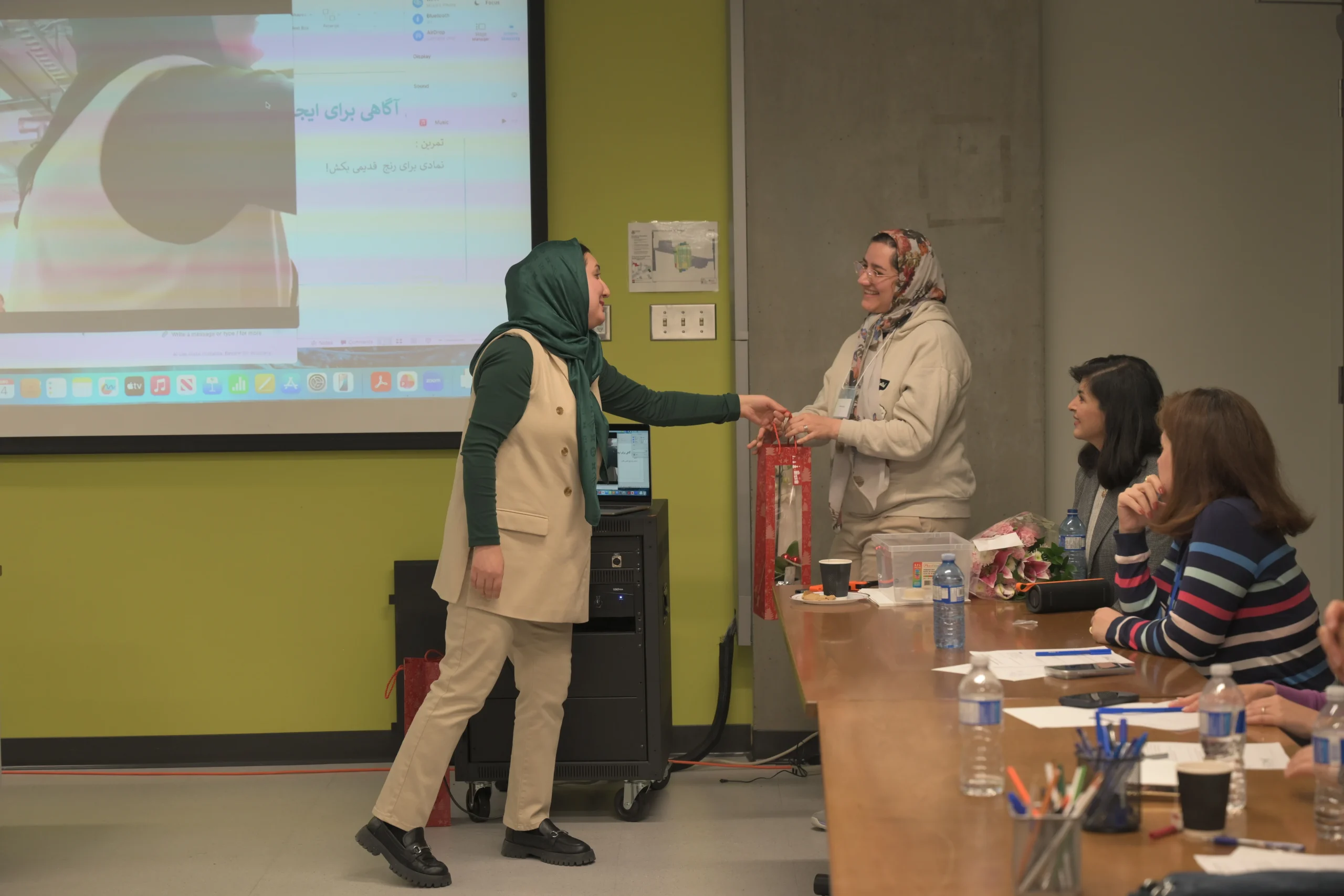
Use Your Voice and Make a Difference in Your Community
Contribute to positive change in your communities and learn how to provide compassionate support to community members in distress.
Gain Confidence to Support Your Community
Our workshops close the gap between wanting to help and knowing how to do it. You will learn practical, culturally based skills that equip you to make a meaningful impact on family, friends, and community members.
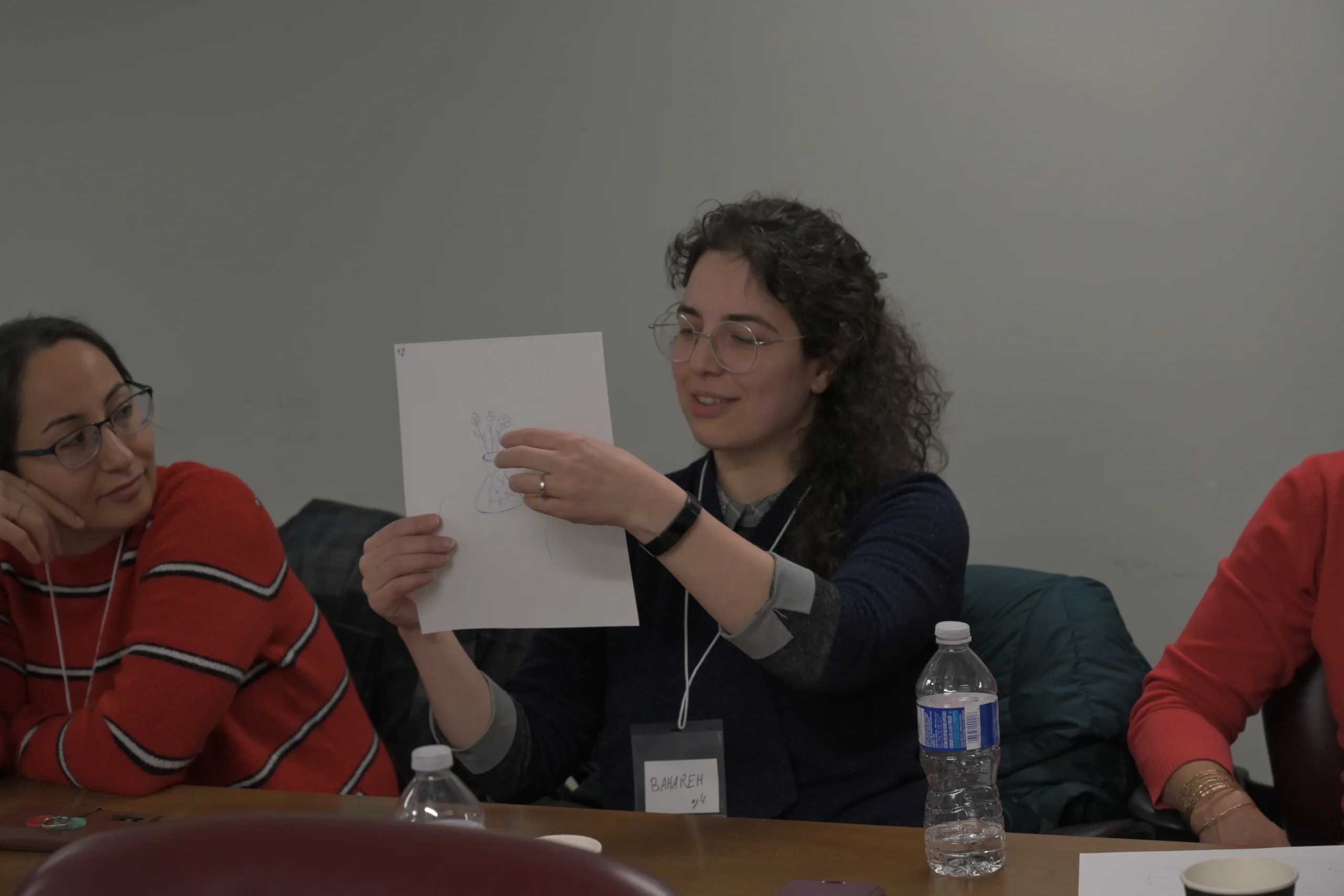
What You Will Master:
- Understanding Mental Health Through a Cultural Lens
- Effective Listening and Initial Support
- Connecting to the Right Resources
- Leveraging Community Strengths
- Self-Care for the Helper
How Coaching Works
1
Begin by enrolling in the foundational “Help for the Helpers” training, available to both adults and youth. This program provides essential mental health knowledge, introduces ethical helping practices, and outlines effective approaches for supporting individuals experiencing distress within your community.
1
Begin by enrolling in the foundational “Help for the Helpers” training, available to both adults and youth. This program provides essential mental health knowledge, introduces ethical helping practices, and outlines effective approaches for supporting individuals experiencing distress within your community.
2
Upon completion of the course, participants are awarded the “Certified Community Helper” certificate. This credential affirms your readiness to assist community members, helping them feel less isolated and more understood.
2
Upon completion of the course, participants are awarded the “Certified Community Helper” certificate. This credential affirms your readiness to assist community members, helping them feel less isolated and more understood.
3
Additional training options are available for those seeking to expand their expertise. These include the Adult Helpers Training on Family Violence and the Youth Circle for Boundaries & Bond. Such sessions are designed to address specific challenges and contexts, further enhancing your ability to provide support.
3
Additional training options are available for those seeking to expand their expertise. These include the Adult Helpers Training on Family Violence and the Youth Circle for Boundaries & Bond. Such sessions are designed to address specific challenges and contexts, further enhancing your ability to provide support.
4
Additionally, coaching sessions with a mentor or mental health professional are available to support the growth of community helpers. These sessions offer practical guidance, effective tools, and strategies to enhance your ability to assist others.
4
Additionally, coaching sessions with a mentor or mental health professional are available to support the growth of community helpers. These sessions offer practical guidance, effective tools, and strategies to enhance your ability to assist others.
5
Continued involvement in peer circles, mentorship, and support sessions is encouraged. This ongoing engagement helps to reinforce your confidence, refine your skills, and maintain strong connections within a supportive network of helpers and community members.
5
Continued involvement in peer circles, mentorship, and support sessions is encouraged. This ongoing engagement helps to reinforce your confidence, refine your skills, and maintain strong connections within a supportive network of helpers and community members.
Benefits of Becoming a Community Helper
Skill-building (active listening, support strategies, resource navigation)
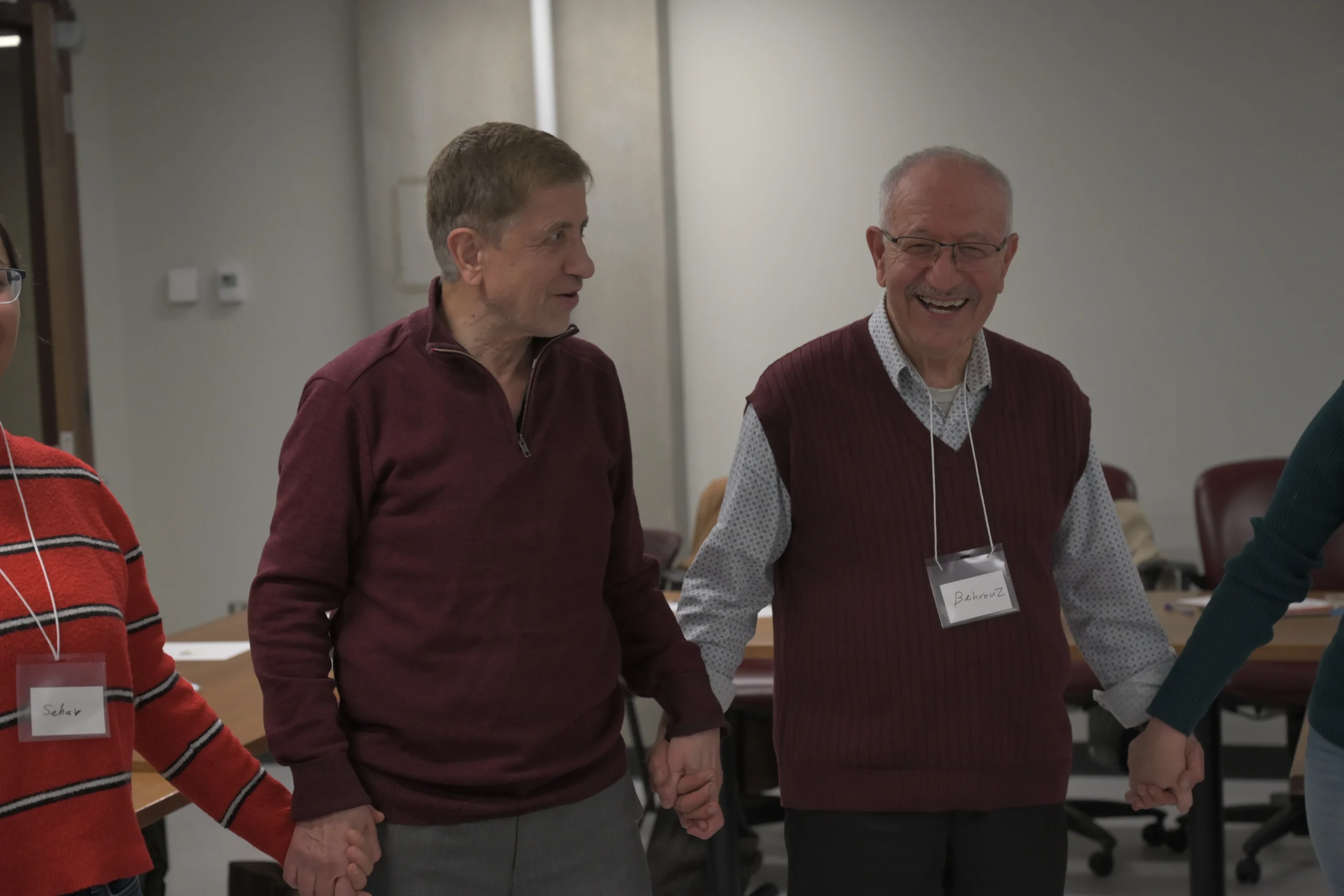
Understanding Mental Health
Through a Cultural Lens
Helpers are introduced to practical techniques, including active listening, paraphrasing, and verifying understanding. These methods enable them to initiate supportive conversations with assurance so that community members are more likely to feel heard, validated, and reassured, particularly during times of distress.
Effective Listening and Initial Support
Culturally informed exercises and metaphors, such as the Rumi-inspired “guest house,” are incorporated to help community members accept both positive and challenging experiences as intertwined in life’s journey. This strength-based framework highlights empowerment, resilience, and collective capacity, turning obstacles into opportunities for personal and communal growth.